The Village Hall Recorder: Who Owns the Footage When the Parish Buys the Cameras?

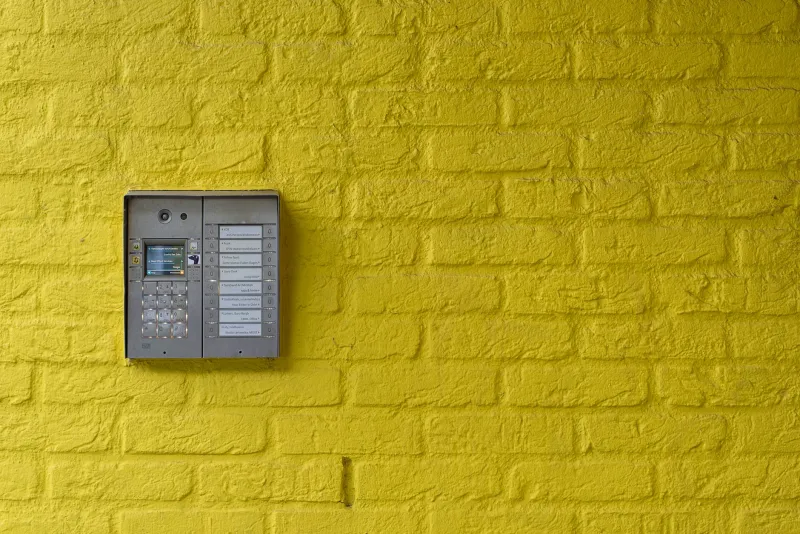
Photo: William Avery, CC BY-SA 2.5, via Wikimedia Commons
There is a particular kind of CCTV installation that exists almost nowhere else but rural Britain. It is four cameras on the back of a village hall, one on the war memorial, and one covering the car park because the parish had a spate of thefts in 2023. It was paid for with a grant from the Police and Crime Commissioner, installed by a volunteer, and it has been quietly recording ever since. Nobody has ever written down who is responsible for it.
That is not a scandal. It is an administrative gap, and administrative gaps are fixable. But they are much easier to fix before something goes wrong — a subject access request from a neighbour, a police request for footage, a break-in where the recording turns out to have been overwritten, or a complaint to the Information Commissioner's Office. What follows is a practical audit that a parish clerk, a village hall trustee or an interested resident can carry out in an afternoon.
Begin with the controller, not the camera
Under the UK GDPR, the data controller is the organisation that decides why and how personal data is processed. For a rural camera scheme, that answer is frequently unclear, and unclear is the worst possible answer.
There are usually three candidates. A parish council is a public authority, subject to the Freedom of Information Act 2000, and will normally be the controller for cameras it funds and operates. A village hall is often held in trust by a charitable body, whose trustees become the controllers. A residents' association is usually unincorporated, which means the individual committee members may bear personal responsibility — a genuinely uncomfortable position for a volunteer treasurer.
Where more than one body genuinely decides the purposes, joint controllership applies and should be documented in writing. A single page naming the controller, the contact point, the purpose, the retention period and the sharing arrangements will do more for compliance than any amount of additional hardware.
Purpose, necessity and the question of proportion
Community schemes tend to be justified by a general sense of unease rather than a specific problem. That is understandable but it is not a lawful basis. The audit question is blunt: what crime or harm is this camera intended to address, and has it done so?
A short written record — a data protection impact assessment, even an informal one — should set out the problem, the alternatives considered, the cameras' placement, whether any camera overlooks private property or public footpaths beyond the intended area, and how the scheme will be reviewed. Schemes that cannot answer the question of proportion often discover that one camera is aimed directly into a neighbour's garden, which is both a privacy problem and a fast route to a complaint.
The Surveillance Camera Code of Practice issued under the Protection of Freedoms Act 2012 is mandatory only for relevant authorities in England and Wales, but it remains the most useful benchmark for everyone else. Its twelve principles fit on two sides of paper.
Signage is the cheapest compliance you will ever buy
A camera without a sign is a camera that has not told anyone it is there. In a village of nine hundred people, that is not a technicality — it is the difference between a scheme that retains consent and one that breeds resentment.
Signs should sit at the entrance to the area covered, not merely on the pole beneath the camera where nobody looks. Each should identify the organisation responsible and give a contact route for questions and access requests. Where a scheme covers a recreation ground, a car park and a playing field, three signs is not excessive.
Retention: the policy nobody writes down
Most rural networks are configured to keep footage for a default period chosen by whoever installed the recorder, sometimes thirty days, occasionally far longer because nobody has logged into the system since. A retention schedule should be agreed, written and enforced: typically 28 to 30 days for general recording, with a documented process for exporting and preserving specific clips where an incident has been reported.
The check is simple. Log in, look at the settings, and confirm the system is actually overwriting as intended. Firmware updates occasionally reset these values.
When the police come calling
Section 33 of the Data Protection Act 2018 permits disclosure for the prevention and detection of crime, but it is a permission, not an obligation, and it is not a blanket authorisation to hand over a hard drive.
A workable arrangement has four features. Requests arrive in writing from a named officer. Each request is logged with the date, the incident reference and what was disclosed. Only the footage relevant to the incident is provided. And there is no informal channel — no WhatsApp clips sent to a local officer, no USB stick left at the pub. Where sharing becomes routine, a written information-sharing agreement and a joint assessment are appropriate.
Subject access in a small community
Anyone whose image is captured can ask for it. The response deadline is one month, the request is free in normal circumstances, and identity should be verified proportionately. The awkward part is redaction: a clip of the village fete contains dozens of identifiable people who have not asked for anything, and their images should generally be obscured.
It is worth agreeing in advance who handles these requests, and giving that person a script. Rural schemes fail here not through bad faith but through embarrassment — nobody wants to tell a neighbour that the answer will take a month.
Cyber hygiene on a grant-funded budget
The Product Security and Telecommunications Infrastructure regime, in force since April 2024, prohibits universal default passwords on consumer connectable products sold in the UK. Older recorders predate it, and many still ship with an admin account set to the same password printed on the box.
Three practical steps cover most of the risk. Take recorders off direct internet exposure and use a VPN or the manufacturer's encrypted relay instead. Put cameras on a separate network segment from any office laptop or till system. And maintain a written list of who holds administrator credentials, because in a village scheme that list is usually a single name.
The Data (Use and Access) Act 2025, whose provisions are being commenced in stages, does not alter any of these fundamentals; the core obligations survive the reform.
The succession problem
Every parish scheme has a lynchpin: the person who chose the kit, set up the app and knows the password. When that person moves to Devon, the scheme usually carries on recording and stops being manageable.
Mitigations are inexpensive. Credentials should be held by the clerk or the trustees in a sealed record. An asset register should list every camera, recorder and licence. Documentation should record the retention settings and the sharing arrangements. A named deputy should have administrator access. And the whole package should be reviewed annually, at the same meeting where the insurance is renewed.
A one-page audit
- Name the data controller in writing, and the contact point for requests.
- Record the purpose, and review whether the scheme is still proportionate.
- Confirm signage at every entrance to the covered area.
- Set and document a retention period; verify the recorder is enforcing it.
- Log every police request on paper.
- Test one subject access request end to end.
- Change default credentials; isolate the network.
- Store credentials, documentation and the asset register with the organisation, not the volunteer.
None of this requires a consultant. It requires an hour, a notebook, and the recognition that a camera scheme is a data processing operation like any other — and that the village green is no less deserving of a lawful basis than a shopping centre.