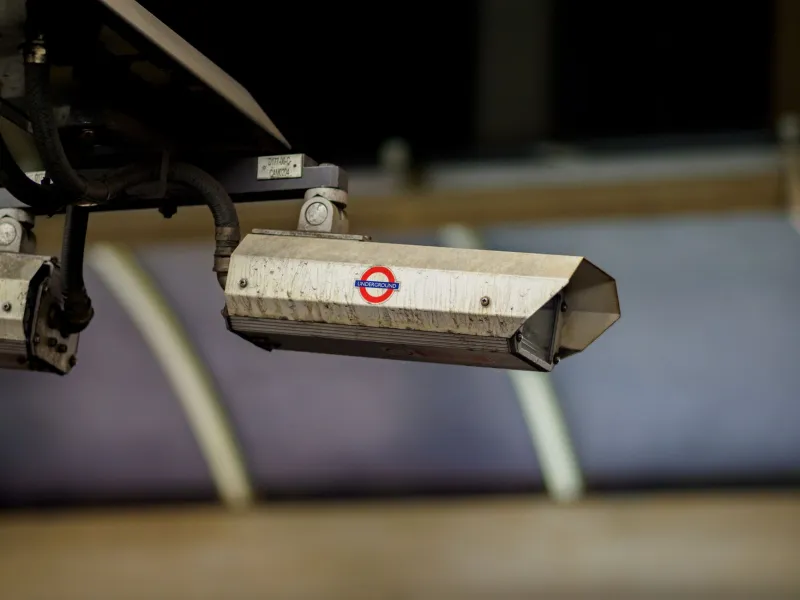
Common Parts, Private Eyes: Auditing Cameras in Britain's Managed Apartment Blocks
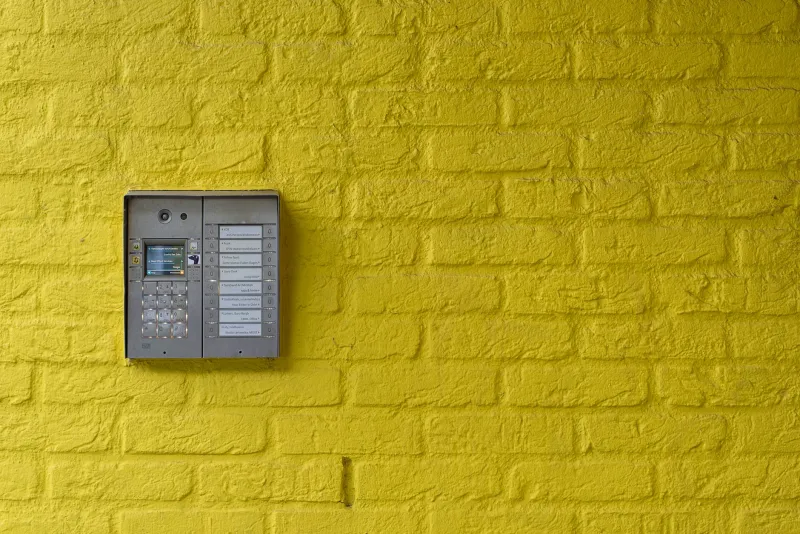
Walk into almost any new apartment building in a British city and the observation begins before the front door closes. A video intercom panel by the entrance. A dome above the lift. A lens trained on the bin store, another on the parcel rack, and a concierge desk with a wall of screens that nobody has thought to explain. For residents, these devices form a private surveillance estate that sits somewhere between household CCTV and public-space camera networks — and the rules that govern it are rarely set out in plain terms.
This audit is intended for tenants and leaseholders who want to understand the arrangement they have joined, and for anyone weighing a move into a managed block or a build-to-rent development where the camera count is a selling point rather than a disclosure.
Who is actually the controller
The first question in any surveillance audit is who decides what the cameras do. In a managed block the answer is often layered rather than singular. The freeholder or a residents' management company may own the equipment; a managing agent may operate it day to day; a specialist monitoring contractor may watch the feeds overnight; and the developer of a build-to-rent scheme may retain control of building systems long after the last flat is let.
Under the UK GDPR, the controller is the organisation that determines the purposes and means of processing. Where a managing agent holds genuine discretion — deciding retention periods, responding to police requests, choosing camera angles — it may be a controller in its own right or a joint controller with the freeholder. A monitoring company acting only on written instructions is normally a processor, but that distinction matters to residents because the processor owes duties to the controller, not to the leaseholder.
Practical consequence: a request addressed to the wrong party can be deflected for weeks. Ask, in writing, for the identity of the controller named on the building's privacy notice, and for the contractual basis on which any third-party operator handles footage.
Reading the signage, and what it should say
The Information Commissioner's Office expects visible, layered transparency. In practice, a compliant notice at a building entrance will identify the organisation responsible, state the purpose of the system in specific rather than generic terms, give contact details for the data protection lead, and point to a fuller privacy notice covering retention, sharing and individual rights.
Too many blocks offer a laminated rectangle reading "CCTV in operation" with no controller named. That is a weak foundation for any later request, and it is a fair item to raise at the viewing stage or with the managing agent in the first month of occupation.
Fobs, apps and the data you generate without noticing
Surveillance in modern blocks is not limited to images. Electronic access control produces a continuous record of movement: which fob entered which door, at what time, and which resident's app unlocked the cycle store. Those logs are personal data. So are the call records from a video intercom, the delivery photographs taken in a parcel room, and any audio captured by an entry panel.
Some intercom hardware now ships with facial recognition or voice activation enabled by default. Residents should ask directly whether biometric templates are generated anywhere in the building, and if so, on what lawful basis and with what opt-out. Consent is difficult to sustain in a communal setting, and a building-wide facial recognition system introduced without a data protection impact assessment is a matter worth escalating.
Retention: the question nobody asks at the viewing
Most residential systems overwrite footage on a loop, commonly after 14 to 30 days. The period should be documented, and it should be justified. A bin store camera retaining ninety days of footage for fly-tipping disputes is a different proposition from a lobby camera retaining seven.
Ask the managing agent for the retention schedule in writing. If the answer is vague, that is itself informative.
Sharing with police and insurers
Managing agents receive requests for footage from police investigating incidents in or near the building, and from insurers handling claims. A voluntary disclosure is permissible under the Data Protection Act 2018 where it is necessary for the prevention or detection of crime, but it is a judgement the controller must make and record — not an automatic service.
Residents can reasonably ask how such requests are handled, who authorises disclosure, and whether a log is kept. A block that discloses footage on the strength of an informal phone call is a block with weak governance.
Making a subject access request that gets answered
An individual has the right to obtain a copy of their personal data, including footage in which they are identifiable, together with information about how it is used. Address the request to the named controller and, where relevant, to the agent. Expect a response within one month, extendable by up to two further months where the request is genuinely complex.
Two practical points. First, be specific about date, time and location — a request for "all footage" across a month invites refusal as manifestly excessive. Second, controllers may redact third-party data, so frames showing neighbours will be blurred or withheld; that does not invalidate the disclosure of your own data.
Before you sign: a short checklist
- Identify every camera covering the flat entrance, corridor, lift, bin store and parking area, and note the stated purpose of each.
- Obtain the building's privacy notice and confirm the controller is named.
- Ask whether the lease or tenancy agreement obliges you to accept future surveillance changes without consultation.
- Establish the retention period and the process for police disclosures.
- Ask whether the intercom system uses cloud storage, where that data is held, and whether biometric features are enabled.
- Confirm how service charge contributions fund surveillance equipment and monitoring contracts.
When informal routes fail
If a managing agent will not explain the system, a written complaint to the controller is the next step, followed by a complaint to the Information Commissioner's Office. Leaseholders additionally have routes through the residents' management company, and tenants through their landlord and, where applicable, the redress schemes. In England, the gradual strengthening of leaseholder and tenant rights continues to give residents more leverage over how communal services — including surveillance — are provided.
The lobby camera is not going away. But the resident who knows who controls the footage, how long it survives, and who gets to see it is in a markedly stronger position than one who simply assumes the building knows best.