Keys, Cameras and Conditions: Auditing Surveillance in UK Short-Term Lets

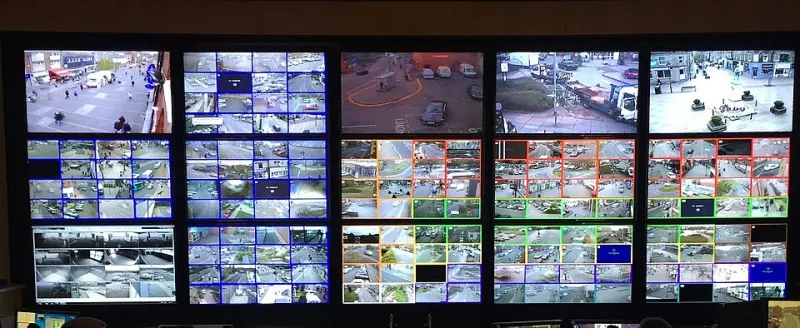
Photo: Jane McAulay, CC BY-SA 2.0, via Wikimedia Commons
A UK short-term let is no longer just a set of keys and a Wi-Fi password. In 2026, hosts may rely on video doorbells, smart locks, noise monitors and occupancy sensors to protect property, manage access and respond to complaints. Guests, meanwhile, arrive with a reasonable expectation that a rented home will function as a home. The difficult ground lies between those two positions: security measures that are proportionate and disclosed, and monitoring that becomes hidden, excessive or unlawful.
Where legitimate security stops
A host has legitimate interests in protecting a property, preventing unauthorised access, deterring parties and meeting safety obligations. That does not create a general licence to observe guests. Where a host processes personal data — and cameras, smart locks and noise monitors usually do — UK GDPR expectations apply. The host is likely to be a data controller for that processing, even when the let is a single property and the operation is small.
The practical tests are familiar: necessity, proportionality, transparency and data minimisation. A doorbell camera covering the front path may be easier to justify than a camera covering a shared hallway. An internal camera in a living area is far harder to justify. A camera or audio device in a bedroom, bathroom or toilet is not a proportionate security measure. Monitoring should be limited to what is genuinely needed, kept for no longer than necessary, and explained before the guest books.
Before booking: the guest’s paper trail
Guests can reduce uncertainty by treating the listing as the start of a privacy assessment. Read the house rules, amenities and any privacy notice attached to the listing. Look for explicit references to cameras, recording, noise monitoring and smart devices. If monitoring is not mentioned, ask directly and in writing: are there any cameras, audio recorders, noise monitors or occupancy sensors at the property; where are they located; do they record; who can access the footage; and how long is it retained?
Keep the answers with the booking confirmation. A host who says there are no internal devices and later installs one has created a documentary record that may matter in a dispute. Ask specifically about audio. Many video doorbells and indoor cameras have microphones that can be enabled or left on by default. A guest who has not been told about audio capture has not been given a fair opportunity to decide whether to stay.
On arrival, a visual check of common areas is reasonable. Guests should not dismantle devices or interfere with security equipment, but they can note what is visible. Pay attention to devices in bedrooms and bathrooms, including smoke-detector-style units, alarm sensors, smart speakers and small cameras. Check whether a noise monitor is a simple decibel sensor or a device capable of recording sound. If something is unclear, ask the host before using the room.
The host’s compliance checklist
Hosts should begin with disclosure rather than installation. The listing should state, before booking, what monitoring exists, where it is placed, why it is there, what it records, how long recordings are kept and who can see them. A generic statement that the property is monitored is weaker than a clear description. If a doorbell camera covers the entrance, say so. If a smart lock logs access times, say so. If a noise monitor detects excessive volume but does not record speech, explain that distinction.
Camera placement should respect the boundary between security and domestic privacy. External cameras should be aimed at the host’s own property and access routes, not at neighbouring homes or public areas beyond what is necessary. Internal cameras should be exceptional and should never cover private spaces. Audio should be disabled unless there is a specific, disclosed and proportionate reason to capture it. Occupancy sensors that reveal when rooms are used can produce intrusive inferences about guests’ routines and should be treated with particular care.
Hosts should also maintain a short privacy notice for guests, a retention schedule and an access policy. Who reviews footage? Is it shared with a letting agent, cleaner, security contractor or platform? Is it stored in the cloud, and for how long? A small host can still take proportionate steps: disable unnecessary features, use local processing where possible, restrict access and delete footage on a fixed timetable. For systematic monitoring, a data protection impact assessment may be appropriate. Hosts should also ensure that any signage at the property is accurate and does not contradict the pre-booking disclosure.
Audio, occupancy and the inference problem
Some of the most sensitive information in a short-term let is not visual. Noise monitors can be configured to detect volume without recording speech, but poorly configured devices may capture conversations. Occupancy sensors can show whether a room is in use, how often and at what times. Smart locks can create a detailed record of arrivals and departures. Each of these can be legitimate for safety or property management, but each can also reveal patterns that guests would not expect to be logged.
The answer is not necessarily to remove every sensor. It is to match the device to a stated purpose and to strip out unnecessary capability. A host who needs to deter parties may not need speech capture. A host who needs to manage cleaning schedules may not need room-level occupancy history. Guests should ask whether audio is enabled, whether sensors record or only alert, and whether access logs are retained. Hosts should document those choices and review them periodically.
If a guest finds undisclosed surveillance
A guest who discovers an undisclosed device should avoid tampering with it. Photograph or video the device in context, note its location and any indicator lights or labels, and preserve the listing, messages and house rules. Ask the host in writing for an explanation and for confirmation of what the device records and who has access. Contact the booking platform through its formal process and keep a record of the complaint. If the device is in a bedroom, bathroom or other private space, or if audio recording is apparent, the guest may reasonably consider leaving and seeking a refund.
Where the guest believes personal data has been processed unlawfully, they can complain to the Information Commissioner’s Office. If there is an immediate safety concern, the ordinary emergency routes apply. Legal advice may be appropriate where a dispute involves significant distress, cancellation costs or allegations of unlawful monitoring. The aim should be to preserve evidence and clarify the facts, not to escalate a confrontation at the property.
A proportionate model for 2026
Short-term letting works best when security is visible in the booking terms and modest in the home. External cameras and smart locks can be explained. Noise monitors can be configured narrowly. Internal monitoring should be exceptional, and private spaces should remain private. Guests should ask precise questions before they pay, and hosts should answer them before they install. The result is not a ban on security technology, but a clearer boundary between protecting a property and observing the people who stay in it.