The Third Dimension of Privacy: Managing Drone Surveillance Over UK Homes and Business Premises in 2026
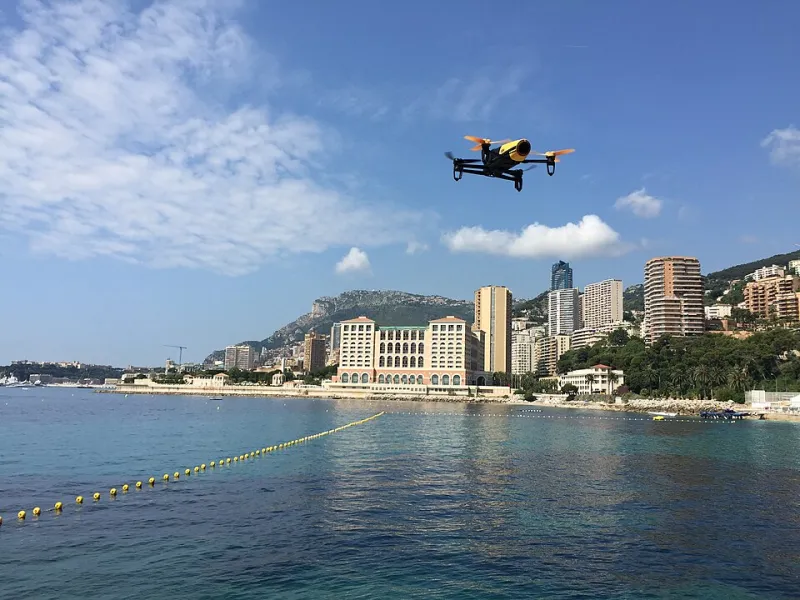
Photo: Halftermeyer, CC BY-SA 4.0, via Wikimedia Commons
A drone hovering above a hedge is not, by itself, evidence of unlawful surveillance. Nor is it automatically harmless. In 2026, lightweight camera drones are widely available, easy to fly and quiet enough to pass unnoticed until they are directly overhead. For homeowners and small businesses, the practical question is not whether drones are good or bad, but what the law actually permits, what it does not, and how to respond without creating a worse problem.
Why the garden boundary is no longer the privacy boundary
Most UK privacy advice focuses on ground-level cameras: doorbells, CCTV, dashcams and workplace monitoring. Drones add a third dimension. A pilot can capture roofs, gardens, yards, loading bays and upper-floor windows without crossing a physical boundary. The aircraft may never land, and the operator may never be visible.
That does not mean the airspace above a home is a legal free-for-all. It does mean that several different legal regimes apply at once: aviation safety rules, data protection law, harassment and public order provisions, and ordinary property law. Each addresses a different part of the problem. Confusing them leads either to exaggerated claims of rights or to a sense of helplessness that is not justified.
What the CAA rules cover — and what they do not
The Civil Aviation Authority regulates how drones are flown, not what their cameras record. The CAA’s rules are principally concerned with safety: registration and operator identification for many consumer drones, keeping the aircraft in sight, altitude limits, separation from people and property, and restrictions around airports, prisons and other sensitive sites. Most camera-equipped drones bought by consumers fall within some registration or remote identification requirement, but the detail depends on weight, class marking and use. The CAA’s published guidance remains the authoritative source.
A flight can therefore be entirely compliant with aviation rules and still raise a privacy concern. Conversely, a privacy intrusion may involve a flight that also breaches CAA requirements. The two issues should be recorded and reported separately. A householder who complains only about “illegal drones” may be told that the flight was lawful, even where the recording raises a separate data protection question.
When does UK GDPR apply to drone footage?
Drone footage that identifies people can be personal data. Whether UK GDPR and the Data Protection Act 2018 apply depends on who is flying and why. The domestic purposes exemption can cover purely personal and household activity, such as a hobbyist filming a family event or inspecting their own roof. That exemption is not a blanket shield. Commercial filming, professional inspections, landlord or letting-agent activity, and systematic monitoring are much more likely to fall within data protection law.
Where UK GDPR applies, the pilot or organisation should have a lawful basis, be transparent about the recording, retain footage only as long as necessary and handle subject access requests properly. A business using drones for site security, stock checks or property marketing should treat the camera as it would any other surveillance system: assess necessity and proportionality, document the purpose, minimise capture and set retention limits.
For a householder, the practical implication is that “it was just a hobby” is a relevant fact but not the end of the analysis. If the drone appears to be operated by a contractor, a commercial photographer, a landlord or a security firm, data protection obligations are more likely to be engaged.
Harassment, nuisance and the limits of a single flight
The Protection from Harassment Act 1997 is sometimes invoked after a single drone visit. In practice, harassment generally requires a course of conduct — at least two occasions — that the defendant knows or ought to know amounts to harassment. A one-off flight may be annoying, intrusive or even unsafe, but it may not meet that threshold. Repeated flights directed at a person, however, can become a police matter, particularly where they are combined with other conduct.
Property law may also be relevant. English law does not treat the owner of land as owning airspace to an unlimited height, but unreasonable interference with the use and enjoyment of land can amount to nuisance. The height, duration, purpose and frequency of the flights all matter. These are fact-sensitive questions, and a solicitor’s advice is more useful than internet certainty.
Can you demand the footage?
There is no general statutory right to stop a private drone pilot in the street and demand their memory card. If the operator is a data controller and the footage includes identifiable personal data, a subject access request may be available. The controller should respond within the statutory period, subject to exemptions. If the operator is a public authority or a business, that route is often more realistic than a confrontation.
Where the flight forms part of an alleged harassment campaign, the police can consider whether evidence should be seized or disclosed. For civil disputes, disclosure may be sought through legal process, but that is rarely proportionate for a single incident. A polite written request to a known operator is often the fastest route — and it creates a record if the matter escalates.
A proportionate playbook for homes and small businesses
-
Record the incident. Note the date, time, duration, approximate height, direction of travel, drone colour and any visible registration marking. Photographs and video of the drone — not of the pilot’s face — are useful. Keep a simple log if flights recur.
-
Separate safety from privacy. Report unsafe flying to the police on 101 or the CAA as appropriate. Raise data protection concerns with the operator or, where relevant, the Information Commissioner’s Office. Do not expect one agency to resolve every aspect.
-
Use signage and boundaries deliberately. A sign stating that the premises are private and that drone recording is not welcome will not create a no-fly zone, but it communicates expectations and supports a record of objection. Hedges, trellis screens, blinds and outdoor lighting can reduce casual capture without confrontation.
-
Do not interfere with the aircraft. Jamming, intercepting, shooting at, throwing objects at or chasing a drone can be dangerous and may itself be unlawful. The same applies to attempts to hack or spoof the drone’s systems.
-
Review business use. If your organisation flies drones or contracts others to do so, document the purpose, conduct a data protection impact assessment where required, brief staff on avoidance of private areas, and set retention rules. A drone camera is a surveillance tool when it is used as one.
-
Escalate proportionately. Repeated, targeted flights should be reported with the log. Legal advice is sensible where nuisance, harassment or significant commercial harm is alleged. For many householders, the realistic aim is not to win an airspace argument but to stop casual intrusion and preserve evidence if it continues.
Drones have made the skies above UK homes and premises more accessible. The law has not given householders a simple right to clear the air, but it has not left them without remedies either. The sensible response is layered: understand the aviation rules, identify the data protection question, keep calm records, and use the least confrontational measure that fits the facts.