Terms of Observation: A Parent’s Practical Audit of School Monitoring in 2026
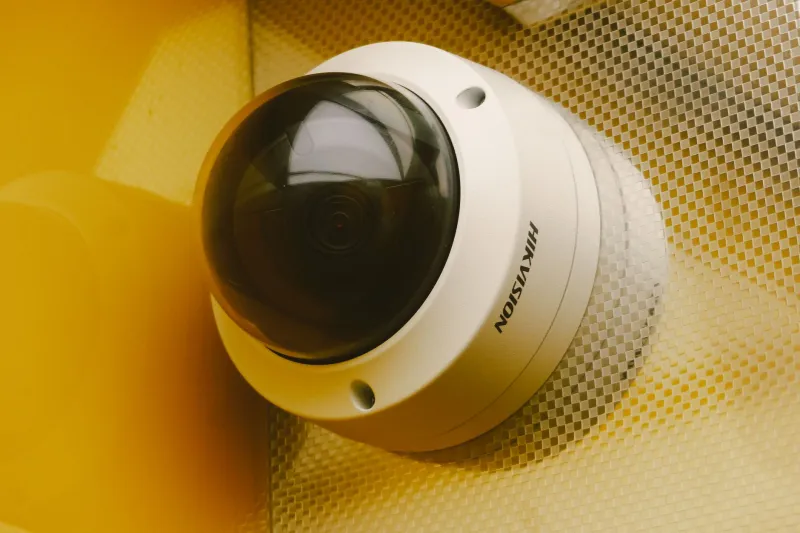
School surveillance is rarely introduced with a single dramatic decision. It arrives in stages: a new camera above a corridor, a fingerprint reader at the canteen till, an analytics package that flags unusual behaviour, a body camera issued to a pastoral team. Each purchase may be justified on safety grounds. Taken together, they create an environment in which children are observed, measured and recorded throughout the school day. For parents, the difficulty is not usually that monitoring exists; it is that the explanation is thin, the paperwork is dense and the practical questions are hard to frame.
A parent-led audit should not be treated as an accusation. Schools have genuine safeguarding duties, and some monitoring is lawful, necessary and proportionate. The purpose of an audit is narrower and more useful: to establish what is being done, why, who can see the data and how long it is kept. That is a data protection exercise as much as a safeguarding one, and it sits firmly within the rights and obligations created by the UK GDPR and the Data Protection Act 2018.
Begin with an inventory, not a rumour
Before asking whether a system is justified, ask what exists. Parents often hear about monitoring through playground conversation, a consent form or a child’s account. A written request to the school can turn that into a reliable list. Ask for the school’s record of processing activities, its CCTV policy, its privacy notices for pupils and parents, and any list of systems that process pupils’ personal data.
The inventory should cover fixed cameras, temporary cameras, door-entry systems, visitor management, cashless canteen systems, library software, behaviour-monitoring platforms, safeguarding records systems, staff body cameras and any audio recording. For each item, ask what data is collected, whether it is live-viewed or recorded, who has access, where it is stored and how long it is retained. Schools do not have to create new documents for every request, but they should be able to explain their processing. In England, maintained schools and academies are generally subject to the Freedom of Information Act 2000, which can be used for policies and contracts where disclosure is appropriate. Data subject rights and FOI are different routes, and neither should be used to obtain footage of other children.
The documents that matter most
The privacy notice is the first test of transparency. It should be written in plain English and, where appropriate, in language children can understand. It should not simply say that cameras are used “for safety”. It should identify the purposes, the lawful basis, the retention period, the categories of recipients and the contact details of the data protection officer.
The data protection impact assessment is the more revealing document. A DPIA is required under Article 35 of the UK GDPR where processing is likely to result in a high risk to individuals. Large-scale CCTV, biometric identification and some AI-driven monitoring can meet that threshold. A good DPIA is not a tick-box form. It should describe the nature and scope of the processing, assess necessity and proportionality, identify risks to pupils and staff, set out mitigations and record whether the school consulted the Information Commissioner’s Office or other relevant parties.
Read the DPIA for specifics. Does it distinguish between safeguarding and general behaviour management? Does it consider the particular vulnerability of children? Does it explain why a less intrusive alternative would not work? Does it address false positives, bias or the risk of normalising surveillance? If the document is a few generic paragraphs with no reference to the actual system, that is a gap worth raising.
Four questions for any system
For each monitoring system, four questions provide a useful framework.
First, what is the lawful basis? Public schools will usually rely on public task or legal obligation for core safeguarding functions, and consent is often a poor fit because of the imbalance of power between school and pupil. Consent may be relevant for some optional systems, but it must be genuinely optional and withdrawable.
Second, is the processing necessary? A camera may deter vandalism in a specific area, but that does not automatically justify cameras in every corridor. A biometric canteen system may speed up queues, but a card or fob may achieve the same result with less intrusion.
Third, is it proportionate? Proportionality asks whether the intrusion is justified by the benefit. Audio recording is far more intrusive than silent video and should require a clear, specific justification. AI behaviour monitoring that infers intent or emotion is especially difficult to justify in a school setting. Staff body cameras require careful rules on when they are activated, what is recorded and who reviews the footage.
Fourth, what are the retention and access rules? Footage kept for 30 days is different from footage kept for a year. Access limited to a named safeguarding lead is different from access for all staff. Ask for the retention schedule and the access log policy.
A practical audit sequence
Start in writing and keep the tone factual. Request the privacy notice, CCTV policy, DPIA summary or full DPIA where appropriate, retention schedule and list of systems. Ask for the name and contact details of the data protection officer. If the school is part of a multi-academy trust, ask whether policies are set at trust level.
Map each system against the documents. If a camera appears in the corridor but not in the privacy notice, ask why. If a biometric system is in use, ask what alternative is available and how consent is recorded. For children, biometric data used for unique identification is special category data under the UK GDPR. Schools in England and Wales should obtain written parental consent before processing a child’s biometric data for identification, and they should offer a reasonable alternative.
Ask for a short meeting with the headteacher, the designated safeguarding lead or the data protection officer. Bring specific questions rather than a general complaint. If the school has a parent forum or governors’ committee, ask for the issue to be considered there. Governors can be useful because they hold oversight without day-to-day operational responsibility.
Challenge without undermining safeguarding
A credible challenge distinguishes between monitoring that is essential to safeguarding and monitoring that is convenient. Parents should not demand the removal of systems that protect children, but they can ask for tighter design: privacy masking in areas where children change or talk privately, audio disabled where it is not necessary, shorter retention, restricted access and clear signs explaining what is recorded.
For biometric canteen systems, ask for a non-biometric alternative and confirm that no child is penalised for choosing it. For AI behaviour tools, ask what decisions the system informs, whether a human reviews every flag and how false positives are handled. For staff body cameras, ask who can activate them, whether pupils and parents are told, and how footage is stored.
When to escalate
Escalation is appropriate when the basics are missing: no lawful basis, no privacy notice, no DPIA for high-risk processing, undisclosed audio recording, excessive retention or a refusal to offer an alternative to biometric identification. In those cases, parents can make a complaint to the school’s data protection officer and, if unresolved, to the Information Commissioner’s Office. Keep a written record of requests and responses.
The school gate is not the boundary of a child’s privacy. It is where accountability begins. A calm, documented audit gives schools a chance to explain themselves and gives parents a way to test whether observation has become the default rather than the exception.