The Posthumous Login: Estate Planning for Britain’s Home Cameras in 2026
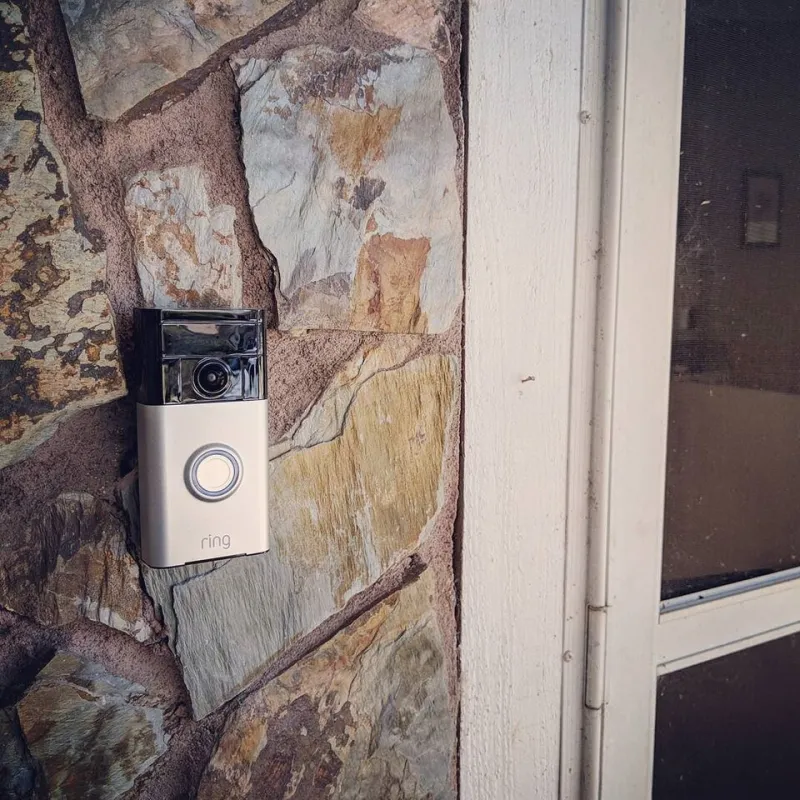
Photo: Robert Nelson from Tarpon Springs, Florida, USA, CC BY 2.0, via Wikimedia Commons
A doorbell camera can record for years without anyone giving it a second thought. It logs callers, deliveries, late-night movements and the ordinary pattern of a street. Then the householder dies. The family may want a last glimpse of a familiar hallway, or a clip that might matter to an insurer or the police. The executor, meanwhile, may find a locked account, an unfamiliar app and a subscription that renews automatically. The device is easy to see; the data behind it is not.
As of November 2026, the digital afterlife of home surveillance is still an under-planned area of UK estate administration. The legal position is not that footage passes neatly to the next of kin like a watch or a piece of furniture. It requires a practical audit, a clear authority trail and a cautious approach to sharing images of people who are still alive.
Why the footage is not simply ‘inherited’
Three things are often confused: the camera, the account and the recordings. The physical device may form part of the estate and pass under a will or the intestacy rules. The cloud account is usually governed by a service contract that may not be transferable. The footage itself may sit on a local SD card, in a provider’s cloud, on a phone, or across all three.
Under the UK GDPR, personal data belongs to living individuals, not to the estate as a whole. The regulation does not apply to the personal data of deceased people. That does not make posthumous footage a free-for-all. A clip of a deceased owner’s front path may also show neighbours, carers, children, delivery drivers or visitors. Those living data subjects retain rights, and an executor who downloads, circulates or publishes such footage may take on data-controller responsibilities.
The domestic purposes exemption is often raised in this context. It can apply to purely personal or household use, but it is not a blanket shield. If a system was used for business purposes, shared with a wider group, or used to monitor staff or public areas, the exemption is unlikely to cover the whole archive. Executors should not assume that ‘it was only a home camera’ settles the question.
The first 72 hours: secure, do not browse
An executor’s first instinct may be to open the app and scroll through recent events. That is usually the wrong order of operations. Before viewing or exporting anything, secure access and stop further sharing.
- Locate the devices, apps, account email addresses, subscriptions and any written instructions.
- Avoid factory-resetting equipment until the archive has been assessed; a reset may erase local footage.
- Disable shared-user access, guest access and automatic cloud uploads where possible.
- Change account passwords only through lawful recovery routes, and keep a written log of what was done and when.
- Notify the provider of the account holder’s death and ask what it requires before granting executor access.
- Preserve footage only where there is a clear reason, such as an insurance claim, a police request or a known dispute.
If the death is being investigated, or if the footage may be evidence in another matter, seek advice before deleting anything. Otherwise, indiscriminate downloading creates a larger and more sensitive archive than the estate needs.
An estate-planning audit for cameras
The most useful preparation is a short camera schedule kept with the will or a letter of wishes. It should be practical rather than technical.
Inventory. Record the make and model of each camera, its location, whether it records locally or to the cloud, the account email, the subscription renewal date and the retention period. Note any smart-home integrations, such as a hub that stores clips or a shared family account.
Access plan. Passwords should not be written into a will, which can become a public document after probate. A sealed letter held by a solicitor, a password manager with emergency access, or a provider’s legacy-contact feature is safer. Apple and Google both offer digital legacy tools; doorbell and CCTV providers vary widely. The plan should name the executor and explain which accounts are involved.
Authority. Executors derive authority from the will or from letters of administration. Providers may still ask for a death certificate, a grant of probate or a court order before releasing account access. A letter of wishes cannot override a provider’s terms, but it can save the family from guesswork.
Retention. Short retention periods reduce the burden on whoever administers the estate. If the householder wants to preserve family moments, those clips should be exported deliberately and stored securely, not left to chance in a rolling seven-day cloud archive.
Sharing rules. State who may receive footage and for what purpose. ‘Share with family’ is too broad. A better instruction is to permit specific extracts for a named purpose, with a requirement to avoid publishing images of neighbours or visitors.
Deletion. Explain how the account should be closed, how devices should be reset, and how the executor should obtain confirmation that cloud footage has been deleted. If the home is sold, the cameras should not be left linked to the old account.
What lawful sharing looks like
An executor may need to share a clip with an insurer, the police, a solicitor or close family. The minimum necessary is the guiding principle. Send a specific extract rather than the whole archive. Avoid uploading footage to neighbourhood WhatsApp groups, social media or public community forums. If the clip includes other people’s homes, number plates or identifiable children, the risks increase.
Police requests should go through the proper channel, with a record kept of what was requested and supplied. Insurers may ask for evidence of a break-in or a damage event; a still image or short clip may suffice. Where living data subjects are identifiable, an executor should consider whether sharing is necessary and proportionate. In complex cases, or where a neighbour objects, legal advice is sensible.
The provider problem
Not every camera company has a compassionate, predictable process for death and account recovery. Some accounts simply become inactive, then are deleted under the provider’s retention policy. Others require probate documents before anyone can download anything. Families who discover the account only after the funeral may find the window has closed.
That is why the audit should happen before death, not after. A named emergency contact, a legacy setting and a clear record of the account email are more useful than a drawer full of obsolete manuals. Where a provider offers no legacy tool, the executor should contact support early and keep a written trail.
The deletion decision
The final question is not ‘how much can we keep?’ but ‘what should survive?’ A few meaningful clips may be worth preserving. Most routine footage should be erased once any legitimate purpose has passed. Deletion should cover the cloud account, local storage, linked phones and any smart-home hub that holds copies. The executor should record the decision, both to protect the estate and to show that data protection was considered.
The camera may well outlive its owner. With a short schedule, a sealed access plan and a clear instruction on retention and sharing, the executor can avoid a locked account and an unnecessary archive. The alternative is a family scrolling through months of neighbours’ comings and goings, unsure what is theirs to keep and what should never have been watched at all.